How Does a CPAP Device Help Treat Sleep Apnea?
A CPAP (Continuous Positive Airway Pressure) device is a non-invasive respiratory therapy machine that delivers a continuous flow of pressurized air through a mask to help keep the upper airway open during sleep.
By preventing the airway from collapsing, CPAP therapy maintains airflow and reduces breathing interruptions associated with obstructive sleep apnea (OSA). This is why CPAP therapy remains a standard first-line treatment for OSA.
The benefit goes beyond fewer breathing pauses. Because the airway stays open, oxygen levels stabilize and the brain no longer jolts the body awake dozens of times per hour. As a result, users typically report deeper sleep and sharper daytime focus within weeks.
For more complex respiratory conditions, a BiPAP breathing device extends this same pressurized-air principle, adding a second setting to assist exhalation. We compare the two later in this guide.
Why Does Obstructive Sleep Apnea Happen in the First Place?
Obstructive sleep apnea happens because the soft tissue at the back of the throat relaxes during sleep and blocks the airway. Because muscles supporting the tongue and soft palate lose tone overnight, the airway can narrow or close completely, cutting off airflow for ten seconds or longer.
Several factors raise this risk, including excess weight around the neck, natural anatomy such as a recessed jaw, and age-related muscle tone decline. According to the American Academy of Sleep Medicine, OSA affects at least 25 million adults in the United States, based on National Healthy Sleep Awareness Project findings.
What Are the Warning Signs of Untreated Sleep Apnea?
The clearest warning signs are loud, chronic snoring and choking or gasping sounds during sleep. However, daytime symptoms often matter just as much:
- Persistent fatigue despite a full night in bed
- Morning headaches
- Difficulty concentrating or memory lapses
- Waking with a dry mouth or sore throat
If left untreated, OSA is linked to higher long-term risk of hypertension, heart disease, and type 2 diabetes, since repeated oxygen drops strain the cardiovascular system.
How Does a CPAP Device Actually Work?
A CPAP device works by pumping room air through a filter and hose at a constant, doctor-set pressure, acting as an “air splint” that props the airway open. Because pressure never drops below the prescribed threshold, soft tissue cannot collapse inward the way it does during an untreated apnea event.
The core components are simple: a motor unit that generates airflow, a humidifier, a hose, and a mask that seals around the nose or mouth. Together, they keep the airway pathway open from the first breath to the last, so a well-fitted mask and consistent pressure mean fewer awakenings and deeper, more restorative sleep.
What Makes an Auto-Titrating (APAP) Device Different From Standard CPAP?
An auto-titrating device, or APAP, adjusts pressure automatically throughout the night instead of holding one fixed value. Because breathing resistance shifts with sleep position and sleep stage, an APAP unit raises or lowers pressure in real time to match what the airway needs at that moment.
Standard CPAP, by comparison, delivers one pressure level set during a sleep study and does not change unless a clinician reprograms it. As a result, APAP often suits patients whose pressure needs vary night to night, while fixed CPAP suits patients with stable, well-established prescriptions.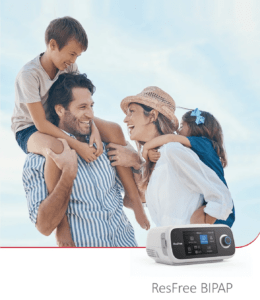
CPAP vs. BiPAP Breathing Device — A Professional Comparison
A CPAP device and a BiPAP breathing device differ mainly in how many pressure levels they deliver: CPAP holds one constant pressure, while BiPAP alternates between a higher inhale pressure and a lower exhale pressure. This distinction is decided clinically, based on diagnostic testing, not personal preference.
| Feature | CPAP Device | BiPAP Breathing Device |
| Pressure delivery | Single, constant pressure | Two levels — higher on inhale, lower on exhale |
| Primary clinical use | Obstructive sleep apnea, snoring | COPD, respiratory insufficiency, complex or central sleep apnea |
| Breathing effort required | Moderate, constant resistance | Lower, since exhale pressure drops |
| Typical prescribing pathway | Sleep study confirms OSA severity | Specialist evaluation for CO2 retention or bilevel need |
Because BiPAP reduces the effort needed to exhale against incoming pressure, clinicians tend to reserve it for patients who need additional respiratory support beyond simple airway splinting.
When Is a BiPAP Breathing Device Clinically Indicated?
A BiPAP breathing device is clinically indicated when a patient struggles to exhale against continuous pressure or has trouble clearing carbon dioxide (CO2) from the lungs. This is common among patients with COPD (Chronic Obstructive Pulmonary Disease), neuromuscular conditions, or central sleep apnea, where the brain’s breathing signal is inconsistent.
A qualified physician determines this need through diagnostic testing, such as an overnight sleep study or blood gas analysis, rather than through self-assessment. This comparison is meant to inform, not replace, a clinical evaluation.
Given how closely device selection depends on diagnosis and severity, institutions and home care providers alike need equipment flexible enough to serve both pathways under one clinically validated platform.
Introducing the Beyond MedTech ResFree Series
Beyond MedTech’s respiratory care portfolio is built around exactly this need, offering both CPAP and BiPAP functionality within one connected product family: the ResFree Series.
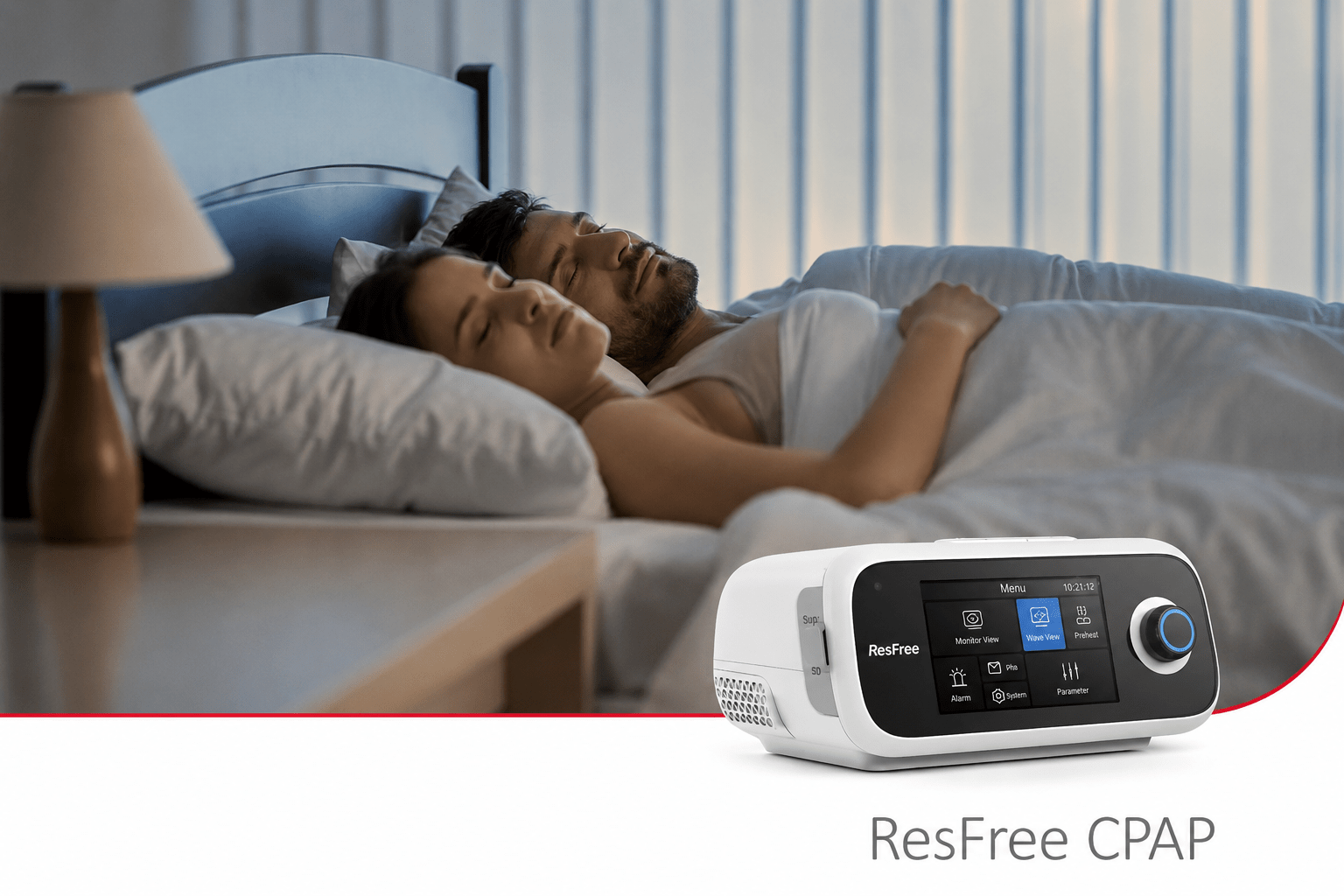
The ResFree CPAP line targets OSA and snoring, using an iAPAP intelligent titration algorithm that analyzes recent therapy records to adjust baseline pressure automatically. It also includes Boost Sensitivity across three levels and Auto RAMP, which keeps pressure low while the user is still awake and increases it gradually after sleep onset.
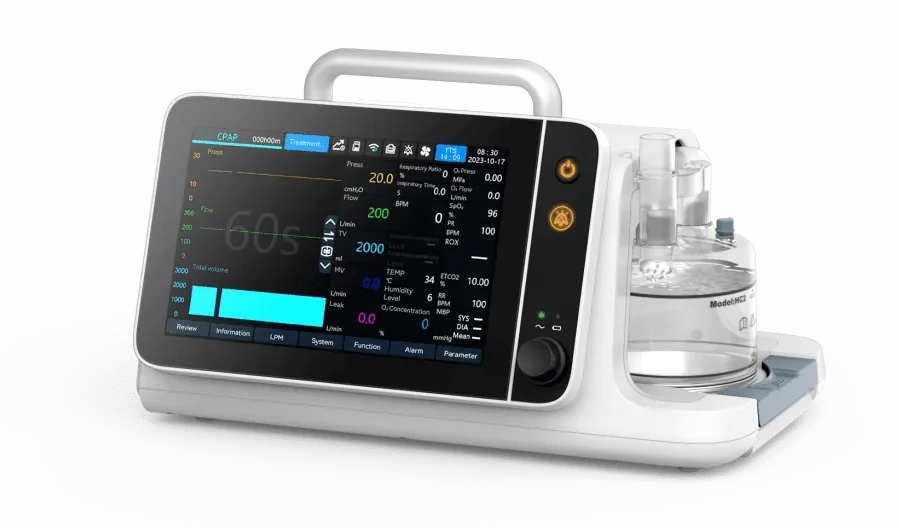
The ResFree BiPAP line, covering models R-25T and R-30T, targets COPD, respiratory insufficiency, and complex sleep apnea. It integrates VAF (Volume Assured Function) technology, which automatically adjusts inspiratory pressure to help maintain a preset target tidal volume.
What Sets the ResFree CPAP and BiPAP Series Apart?
Both series share a compact 1.37 kg main unit and humidifier, plus noise levels at or below 26 dBA — a quieter, lighter device is easier for institutions and home users alike to manage without disrupting sleep.
- Built-in WiFi/4G connectivity for automatic cloud data upload, removing manual SD card handling
- Mobile app and web access so patients, families, and authorized clinicians can monitor therapy remotely
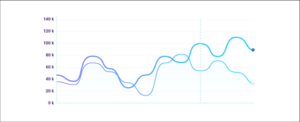
- Automated compliance reports and data trend charts to support clinical decision-making
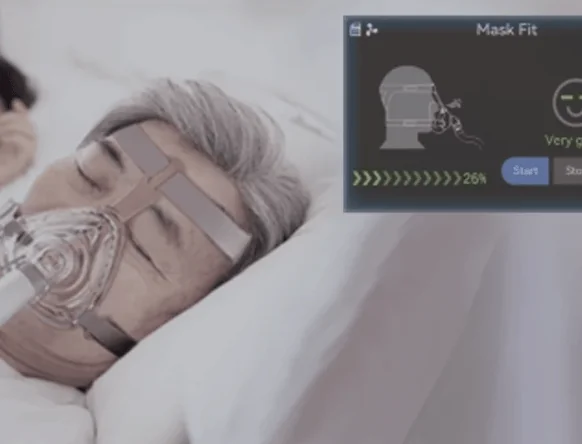
- Mask Fit Detection on BiPAP models, checking seal integrity at startup and identify potential leakage issues.

Matching CPAP and BiPAP Equipment to Different Purchase Scenarios
Choosing between CPAP and BiPAP equipment looks different depending on whether the buyer is a hospital, a distributor, or a home care provider, because each faces distinct procurement priorities.
For hospitals and clinics, cloud connectivity and automated compliance reporting reduce manual workload on respiratory therapists, while having CPAP and BiPAP under one platform simplifies staff training and inventory. Distributors and agents need a model matrix covering a wide diagnostic range without excessive SKUs — one series spanning OSA through COPD indications lets a single supplier relationship serve multiple institution types.
Home care users and their families generally weigh a different set of factors:
- Noise level, since a bedroom device needs to stay unobtrusive overnight
- Weight and portability for travel or multi-room use
- Ease of setup, including humidifier maintenance and mask fitting
- Remote monitoring, so family members or clinicians can track therapy without an in-person visit
In every scenario, the equipment decision should follow a documented diagnosis and prescription. This section addresses procurement and deployment considerations, not the underlying medical decision itself.
Conclusion — Getting Started With the Right Respiratory Therapy
A CPAP device and a BiPAP breathing device both manage air pressure to keep the airway open, but they serve different clinical needs — one for consistent OSA management, the other for more complex respiratory support. Understanding this distinction helps institutions, distributors, and home care users ask sharper questions when evaluating equipment.
Because sleep apnea and related respiratory conditions affect patients ranging from mild snorers to complex COPD cases, access to a connected, clinically documented product family simplifies both prescribing and long-term monitoring. Beyond MedTech’s ResFree Series was built around that range, pairing CPAP and BiPAP technology with cloud-based compliance tracking for clinicians and families alike.
Ultimately, the right device depends on a proper diagnosis. Anyone experiencing symptoms of sleep apnea should consult a qualified physician before selecting or adjusting any respiratory therapy equipment.