Modern pulmonary medicine relies heavily on non-invasive breathing support to treat acute and chronic respiratory conditions. A non invasive ventilator delivers controlled air or oxygen mixtures through a mask, assisting impaired lungs without requiring invasive surgical tubes. By increasing airway pressure during inhalation, this therapeutic method promotes proper lung expansion and improves oxygen transport throughout the bloodstream. In essence, any medical ventilator designed for non-invasive use shares this fundamental goal: supporting respiration while preserving patient comfort and safety.
In clinical practice, medical professionals frequently deploy these non-invasive devices to mitigate severe respiratory distress caused by COPD or acute pulmonary edema. Preserving natural airway defenses allows patients to communicate and swallow without discomfort. At Beyond, we develop advanced respiratory solutions that assist clinical teams in delivering gentle, patient-centered pulmonary therapy across diverse healthcare environments.
Defining the Core Mechanics of Assisted Ventilation
Modern mechanical breathing equipment alters internal airway pressures to facilitate natural gas movement within human lungs. By generating positive pressure during inspiration, the device forces air into pulmonary passages and relieves physical stress on the diaphragm. During exhalation, passive elastic forces allow the chest wall to relax naturally, allowing carbon dioxide to escape efficiently.
To manage this complex process safely, modern internal pressure sensors continuously analyze air speed, delivered volume, and resistance dynamics. Intelligent internal algorithms modify these variables instantly to match human breathing efforts. Our engineering teams design internal pneumatic assemblies to minimize breathing effort while maintaining precise flow delivery.
Technical Distinctions Between Invasive and Non-Invasive Systems
Invasive therapy requires placing an endotracheal or tracheostomy tube directly into a patient’s lower trachea. While crucial during profound medical emergencies, invasive procedures elevate secondary infection risks and require sedating medications. Non-invasive equipment uses external masks, keeping upper airway structures intact and preserving natural defense mechanisms.
Selecting the proper ventilation technique depends on patient consciousness, underlying clinical conditions, and therapeutic goals. Non-invasive devices offer an effective middle ground for individuals who require substantial breathing support while remaining awake and cooperative. We at Beyond focus on engineering adaptable respiratory solutions that support varying acuity levels safely.
Primary Operating Modes in Non-Invasive Respiratory Care
Non-invasive mechanical ventilation relies primarily on two main operational modes: continuous positive pressure and bi-level positive pressure. Continuous pressure keeps collapsed alveolar sacs open by maintaining constant positive air force throughout inspiration and expiration. Bi-level systems deliver higher pressure during inhalation to assist intake, dropping to lower pressures during exhalation for comfort.
Combining multiple respiratory modalities into a single platform helps medical staff manage shifting clinical needs without swapping equipment. The ResAero Series integrates multi-mode functionality, letting care teams transition smoothly between CPAP, BiPAP, and high-flow oxygen therapies. This adaptability allows healthcare professionals to tailor treatments directly as patient recovery progresses.
Gas Exchange Dynamics and Airflow Regulation
Gas exchange depends on maintaining adequate alveolar ventilation while controlling pressure gradients across pulmonary tissue. Controlled positive pressure forces oxygen across alveolar membranes into capillary networks while encouraging efficient removal of metabolic carbon dioxide. Proper pressure regulation prevents both lung collapse and tissue damage caused by excessive volume delivery.
Advanced flow sensors monitor subtle changes in patient effort to trigger immediate pressure delivery. These dynamic responses prevent asynchronous breathing, where patient inhalation efforts clash with machine delivery cycles. Modern pneumatic valves regulate flow rates rapidly, creating smooth pressure transitions that mimic natural human respiration patterns.
Airway Conditioning and Patient Comfort Features
Delivering pressurized dry air directly into human airways can cause mucosal drying, irritation, and increased airway resistance. Modern medical ventilator systems integrate controlled thermal humidification to warm and hydrate delivered gases. Maintaining proper moisture levels protects mucosal linings, supports natural ciliary movement, and improves overall treatment tolerance during long care sessions.
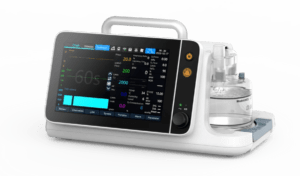
To further optimize gas delivery, advanced devices support variable oxygen inputs tailored to specific clinical requirements. The ResAero Series features a dual-mode O₂ source and built-in humidifier to maintain optimal air temperature and humidity. These features keep delicate pulmonary tissues protected while ensuring accurate gas mixtures reach the patient’s lungs.
Intelligent Control Systems and Real-Time Monitoring
Modern medical technology relies on sophisticated microprocessors to collect and interpret real-time physiological data during ventilation sessions. High-resolution numerical displays present dynamic pressure curves, flow waves, and tidal volume measurements to guide clinical adjustments. Immediate feedback loops enable healthcare workers to recognize changes in pulmonary compliance instantly.
Artificial intelligence algorithms enhance patient-device coordination by dynamically adjusting for accidental mask leakage. Incorporating AI-driven intelligent control alongside comprehensive monitoring on a 10.1″ screen helps healthcare teams evaluate lung performance accurately. These automated systems maintain consistent pressure delivery despite changing leak rates, maintaining stable ventilation without frequent manual interventions.
Clinical Applications and Therapeutic Outcomes
Hospitals rely on positive pressure ventilation across emergency rooms, intensive care units, and step-down rehabilitation wards. Rapid deployment of non-invasive support often prevents respiratory failure from escalating, avoiding risky invasive intubations entirely. Patients benefit from shorter intensive care stays, reduced infection risks, and faster overall recovery times.
Beyond acute hospital settings, portable positive pressure devices provide vital long-term support for chronic respiratory conditions at home. Consistent nightly therapy prevents nocturnal hypoventilation in patients with neuromuscular weakness or severe sleep apnea. Flexible pressure settings allow individuals to maintain active daily lives while receiving essential pulmonary assistance.
Conclusion
Understanding how a modern medical ventilator functions highlights its vital role in supporting respiratory health across diverse clinical settings. Combining precise pressure control, real-time feedback, and automated adaptation enables modern platforms—whether used invasively or as a non invasive ventilator—to deliver comfortable, effective pulmonary assistance. At Beyond, we continue advancing respiratory technology to support clinicians worldwide and improve patient care outcomes.