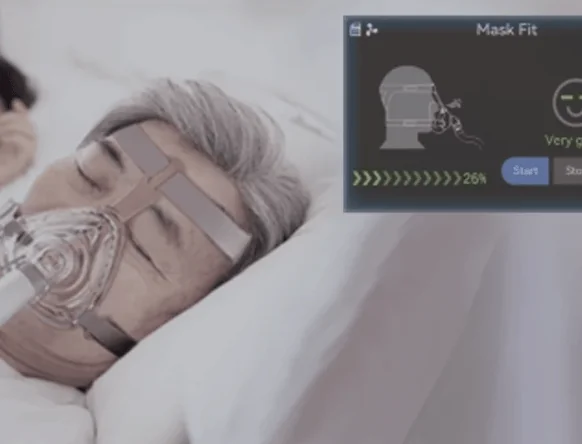
A medical ventilator supports COPD patients in clinical care by reducing breathing effort, assisting ventilation and carbon dioxide clearance, controlling oxygen delivery, and providing monitoring data for timely clinical adjustment. During an exacerbation, narrowed airways, secretions, and fatigue can make each breath less effective.
For healthcare teams, the practical question is how a medical ventilator supports COPD patients from assessment to adjustment. The answer depends on breathing mechanics, oxygen control, monitoring, tolerance, and escalation planning.
How Does COPD Change What a Medical Ventilator Must Do in Clinical Care?
COPD changes ventilator use because clinicians must support airflow, oxygenation, carbon dioxide clearance, and breathing effort. Treating only one sign can miss the deeper ventilation problem.
- Air trapping can make exhalation incomplete and increase the effort needed for the next breath.
- Hypercapnia can appear when the patient cannot move enough air to clear carbon dioxide.
- Hypoxemia can require controlled oxygen delivery without ignoring ventilation status.
- Fatigue can turn a compensated COPD episode into acute respiratory failure.
Why Does COPD Create Both Oxygen and Ventilation Problems?
COPD creates both oxygen and ventilation problems because damaged airways limit gas movement. Oxygen may not enter efficiently, and carbon dioxide may not leave efficiently.
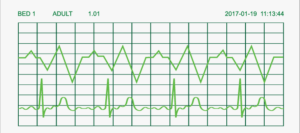
Therefore, bedside teams usually read several signals together: respiratory rate, accessory muscle use, oxygen saturation, alertness, secretion burden, and gas exchange. These signs show whether the patient is improving or tiring.
When Does Breathing Effort Become a Ventilator Decision?
Breathing effort becomes a ventilatory support decision when increased work of breathing, impaired gas exchange, rising carbon dioxide, or mental status changes suggest that oxygen and medication alone may not be enough. At that point, support must reduce workload, not simply raise oxygen flow.
A clear pathway helps teams avoid delay: assess the dominant problem, choose oxygen support, high-flow support, non-invasive ventilation, or invasive ventilation, then reassess response.
How Does a Medical Ventilator Stabilize COPD Patients During Acute Exacerbations?
A medical ventilator stabilizes COPD patients by assisting ventilation, reducing respiratory muscle strain, supporting oxygen delivery, and giving clinicians response trends. The device becomes part of a monitored clinical loop.
- Reduce the work required for each breath.
- Improve ventilation when carbon dioxide is a concern.
- Support oxygen delivery while avoiding unnecessary oxygen loading.
- Help avoid intubation when non-invasive ventilation is clinically suitable.
- Provide trend data for therapy adjustment and escalation.
How Does Bi-Level Pressure Support Help COPD Patients Breathe?
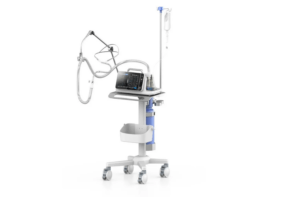
Bi-level pressure support helps COPD patients breathe by using higher pressure during inhalation and lower pressure during exhalation. This pressure difference assists airflow while allowing exhalation to remain more comfortable.
In a bipap hospital workflow, settings alone do not prove success. Clinicians also watch mask leak, patient-ventilator synchrony, respiratory rate, comfort, and gas exchange because a patient can look settled before fatigue returns.
How Does Oxygen Control Support Safer COPD Ventilation?
Oxygen control supports safer COPD ventilation because the bedside goal is enough oxygen plus adequate ventilation. A rising oxygen level does not automatically mean the breathing mechanics are improving.
For example, a patient with low oxygen and rising carbon dioxide may need pressure support more than a simple oxygen increase. Teams compare oxygen saturation with ventilation indicators before changing the plan.
How Should Teams Match Ventilation Modes to COPD Bedside Problems?
Teams should match ventilation modes to the patient’s main bedside problem, not a generic device category. COPD care may require oxygen support, pressure support, humidification, secretion management, or escalation readiness.
- Controlled oxygen fits patients whose oxygenation is the main concern and whose breathing effort remains stable.
- High-flow nasal cannula (HFNC) fits patients who need heated, humidified flow and oxygenation support.
- Non-invasive ventilation (NIV) fits patients who need pressure support to reduce workload and assist ventilation.
- Invasive ventilation fits patients when non-invasive support is unsuitable or fails to protect the airway.
When Should COPD Teams Compare NIV and HFNC?
COPD teams should compare NIV and HFNC when the patient needs respiratory support but the dominant problem is mixed. HFNC supports flow, humidification, and oxygen delivery; NIV adds pressure support for ventilation.
The comparison matters when oxygenation difficulty appears with signs of carbon dioxide retention. In that situation, the clinical question is whether flow is enough or pressure support is needed to unload breathing muscles.
Which Monitoring Signals Show Whether COPD Support Is Working?
Useful monitoring signals reveal improvement, intolerance, or failure. Respiratory rate, oxygen saturation, inspired oxygen fraction, tidal volume, minute ventilation, leakage, pressure, pulse rate, and gas exchange support bedside decisions.
If trends worsen, the protocol should make the next action clear. This may include mask adjustment, secretion management, mode change, medical review, or escalation to a higher level of respiratory support.
How Does ResAero Connect Medical Ventilator Functions to COPD Care?
We present the ResAero Series as an integrated respiratory care platform that combines NIV, HFNC, nebulization, oxygen-source flexibility, built-in humidification, monitoring, and connectivity. The page lists multi-mode integration, a 10.1-inch screen, AI-driven intelligent control, dual-mode oxygen source, built-in humidification, and professional analytics.
- NIV targets COPD, hypercapnia, and post-extubation support.
- NIV modes include CPAP, S, T, S/T, and APCV.
- HFNC provides up to 80 L/min of heated and humidified oxygen-air mixture.
- The system accepts high-pressure central oxygen and low-pressure concentrators.
- Connectivity includes Wi-Fi, wired LAN, remote monitoring, and analytics.

Why Does Multi-Mode Support Matter for COPD Care?
Multi-mode support matters because COPD patients can move between different respiratory needs during one clinical stay. A patient may need oxygenation support first, NIV during fatigue, and nebulization for airway management.
Our product page lists seamless switching between HFNC and NIV, a dedicated hardware nebulizer port, leakage compensation, proximal pressure sensing, and alarms. These functions align with common COPD bedside concerns: tolerance, synchrony, and therapy continuity.
How Can Connectivity Support Clinical Continuity?
Connectivity can support clinical continuity by keeping treatment information available. Our system can upload treatment data to cloud platforms and support remote monitoring through mobile apps or PC portals.
That matters when patients move from emergency assessment to ward or step-down care. A connected workflow helps teams review therapy patterns, document changes, and discuss treatment response with fewer missing details.
Conclusion: How Should Hospitals Use Medical Ventilator Selection to Improve COPD Care?
Hospitals should use medical ventilator selection to improve COPD care by matching capability to the patient pathway. The strongest fit supports assessment, therapy choice, monitoring, adjustment, and escalation together.
- Confirm whether the main issue is hypoxemia, hypercapnia, secretion burden, fatigue, or post-extubation support.
- Compare NIV, HFNC, nebulization, oxygen delivery, and monitoring needs before choosing equipment.
- Review official product specifications instead of relying on generic ventilator claims.
- Build a protocol for escalation when respiratory rate, gas exchange, mental status, or tolerance worsens.
Beyond ResAero is relevant because its official product page connects NIV, HFNC, nebulization, oxygen-source flexibility, monitoring, and connectivity in one respiratory care platform. That combination supports the real COPD challenge: treating breathing mechanics, workflow, and clinical review together.