Managing acute pulmonary distress in intensive care settings requires versatile technology capable of adapting to shifting clinical needs. Deploying a dedicated HFNC machine alongside positive pressure devices has long helped clinical teams manage hypoxemic and hypercapnic conditions. Consolidating these separate modalities into a unified hardware platform optimizes patient transitions while reducing device congestion at the bedside.
Hospital care teams often face challenges when transferring critically ill patients between distinct breathing systems during therapy escalation. At Beyond, we study how multi-modal systems streamline clinical workflows and protect fragile pulmonary tissue during acute care interventions.
Clinical Challenges in Intensive Respiratory Care
Intensive care units treat complex pulmonary disorders requiring varying levels of mechanical support. Physicians must frequently adjust oxygenation and pressure support as patient stability changes during acute exacerbations. Traditional setups require switching physical equipment, which disrupts continuous monitoring and increases setup delays during time-sensitive crises.
Swapping respiratory hardware during active therapy increases infection exposure and creates operational friction for nursing personnel. Managing multiple single-purpose machines also increases maintenance complexity across hospital departments. Modern critical care strategies emphasize streamlined solutions that maintain continuous support across evolving patient conditions.
Mechanics of High-Flow Nasal Cannula Therapy
High-flow nasal cannula therapy delivers warmed, humidified gas blends at high flow rates directly into upper nasal passages. High velocity gas flushes dead space in the upper airway, enhancing carbon dioxide clearance and reducing overall work of breathing. Additionally, high airflow generates mild positive end-expiratory pressure that helps keep collapsed alveoli open.
Maintaining precise temperature and moisture levels prevents mucosal dehydration during high-flow administration. Heated gas mixtures keep airway cilia functioning naturally, supporting airway clearance in acute pulmonary patients. The flexibility of high-flow therapy makes it a key intervention for moderate hypoxemic failure.
Non-Invasive Ventilation in Acute Pulmonary Management
Non-invasive positive pressure ventilation provides structured pressure support for patients suffering from severe respiratory exhaustion. Delivering dual pressure levels assists weak respiratory muscles during inhalation while keeping passages open during exhalation. This dual-pressure support increases tidal volume delivery without requiring invasive endotracheal intubation.
Using positive pressure masks preserves natural swallowing and speaking abilities, enhancing overall patient tolerance. Preventing invasive intubation reduces secondary airway trauma and lowers hospital-acquired infection risks significantly. Careful pressure titration helps maintain stable arterial blood gas levels during critical care sessions.
Advantages of Multi-Modal Platform Architecture
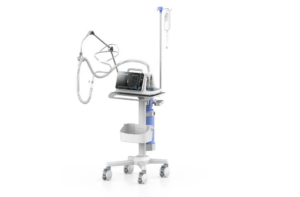
Unlike single-mode devices that treat high-flow oxygen as a basic afterthought add-on, purpose-built platforms unite non-invasive support with high-flow oxygen delivery. An uncompromised 3-in-1 platform built from the ground up delivers robust NIV performance, precise high-flow oxygenation, and synchronized nebulization on one ResAero Series ventilator. Our engineering focus at Beyond centers on integrating these core therapeutic modes into one unified architecture.
Seamless switching between HFNC and NIV modes allows clinicians to adjust therapies instantly without swapping patient breathing circuits. Unifying therapeutic modalities within a single platform maintains continuous monitoring data across treatment phases. This operational continuity helps clinical teams assess recovery trends without interruption.
Synergy of Aerosol Delivery and Gas Conditioning
Inhaled medication delivery remains vital for treating bronchospasms and reducing airway inflammation in critically ill patients. Traditional nebulizers placed within respiratory circuits often compromise pressure accuracy or flow stability. Integrating aerosol administration directly into the main gas delivery system maintains consistent pressure dynamics throughout medication delivery.
Equipping hardware with a dedicated hardware nebulizer port allows clinicians to administer aerosolized drugs smoothly during active ventilation. Synchronized nebulization delivers medication micro-droplets deep into bronchial pathways without interrupting oxygenation. Combining conditioning and aerosolization improves medication absorption while keeping mucosal linings protected.
Workflow Optimization and Cost Efficiency
Managing separate devices for high-flow oxygen, non-invasive ventilation, and nebulization places high financial demands on healthcare institutions. Purchasing individual devices increases capital expenditures, maintenance contracts, and storage footprint within busy intensive care wards. Consolidating these capabilities into a single medical ventilator optimizes capital utilization across hospital departments.
Centralizing clinical capabilities reduces equipment procurement costs while simplifying training requirements for medical staff. Nurses interact with a unified touchscreen user interface, reducing setup errors and operational complexity. Streamlined hardware design ultimately lowers long-term operational costs for critical care facilities.
Adapting Support During Patient Recovery Transitions
Patient recovery in intensive care involves gradual step-down phases from intensive pressure support to spontaneous breathing assistance. Utilizing a dedicated HFNC machine during post-extubation or post-NIV weaning stabilizes respiratory effort while preventing secondary failure. Gradual pressure reductions help patients regain independent muscle control safely.
Flexible platforms allow care teams to step down therapy parameters within the same hardware setup as lung compliance improves. Avoiding equipment changes minimizes patient stress and maintains stable oxygenation throughout weaning transitions. This uninterrupted therapy pathway supports faster rehabilitation and shorter intensive care stays.
Real-Time Physiological Response Management
Modern intensive care relies on immediate parameter feedback to adjust ventilation delivery as patient lung compliance varies. Integrated sensors continuously track delivered volume, pressure changes, and circuit leakage to maintain stable pressure gradients. Real-time displays provide clinicians with essential trend data to guide clinical decision-making.
Automated adaptation algorithms assist clinical teams by stabilizing pressure output despite changing facial mask seals. At Beyond, we incorporate intelligent dynamic controls that respond instantly to spontaneous breathing efforts. Reliable parameter adjustments support optimal patient-device synchronization throughout extended treatment sessions.
Conclusion
Integrating high-flow oxygen, non-invasive pressure support, and synchronized nebulization into a single platform transforms modern intensive care management. Utilizing a versatile medical ventilator enables clinicians to adapt therapies rapidly while maintaining precise patient monitoring. Our team continues advancing flexible respiratory solutions to support healthcare professionals and improve patient outcomes worldwide.